
The Two Clocks of Exile
The SympathizerThe recurring images of letters, photographs, clocks, and ghostly memories show how the narrator experiences time as a struggle between return and repetition.
increasing Bearing strength in each event
 decreasing
Bearing strength in each eventdecreasingA Coded Calendar

A Coded Calendar
Messages Across Distance
The narrator sends reports to Man through letters that use weather, coded words, and book references. The correspondence makes ordinary dates and seasons part of an intelligence system.
Waiting Without a Timetable
The narrator has no clear date for returning to Vietnam. Time is measured by letters, political developments, and the changing condition of the exiles.
The code connects the two men while emphasizing how exile replaces direct presence with delayed signals.
A Clock Shaped Like Vietnam
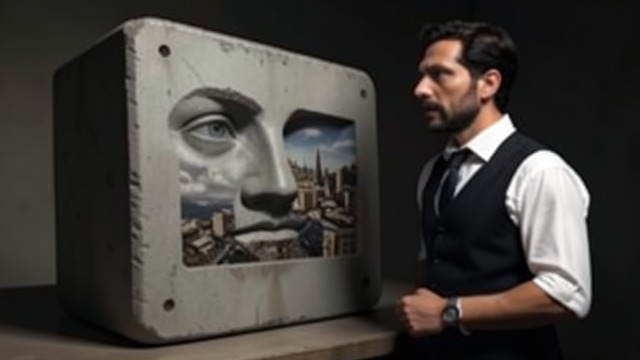
A Clock Shaped Like Vietnam
Geography on a Dial
The narrator notices a clock shaped like Vietnam, with its hands centered near Saigon. Madame explains that it is set to Saigon time rather than American time.
Exile’s Circular Motion
The clock suggests that the refugees live in two time zones and move repeatedly between remembered past and uncertain future. Their imagined return does not advance in a straight line.
A household object becomes a map of displacement, where the lost country governs the present even from far away.
Ghosts in the Present
Ghosts in the Present
The Dead Return
Sonny and the Crapulent Major appear to the narrator during the expedition, while memories of the dead interrupt the men’s movement through the forest. The past is not confined to recollection.
Time Stops and Repeats
The narrator experiences deaths, conversations, and prior choices as present events. The journey’s uncertain chronology mirrors his inability to move beyond the people he has killed or failed to save.
Ghosts make memory active and accusatory, refusing the comforting idea that the past has ended.
The Missing Interval

The Missing Interval
A Gap in Memory
After the explosion, the narrator knows that something has been erased from his memory but cannot identify the missing event. The absence itself becomes a source of fear.
An Unstable Record
He receives money from the studio and returns to California without recovering the missing portion. His written account must later be tested against memories he cannot fully access.
The gap suggests that personal history can be damaged as well as suppressed, complicating the narrator’s claim to tell a complete story.
Writing Against Forgetting

Writing Against Forgetting
Copying His Own Life
After the examination, the narrator slowly copies his earlier confession. Rewriting the pages helps him reconnect with the person described in them.
A Record Still Incomplete
He then adds an account of the examination and the revelations about the Communist Agent. The manuscript remains a constructed record, shaped by what he can remember and what he has learned to acknowledge.
Writing does not eliminate uncertainty, but it gives the narrator a way to preserve contradictions that official histories would simplify or omit.
After the narrator reaches California
After the General opens the restaurant
During the cross-border journey
After the film-set explosion in Manila
During the narrator’s recovery in the camp
